

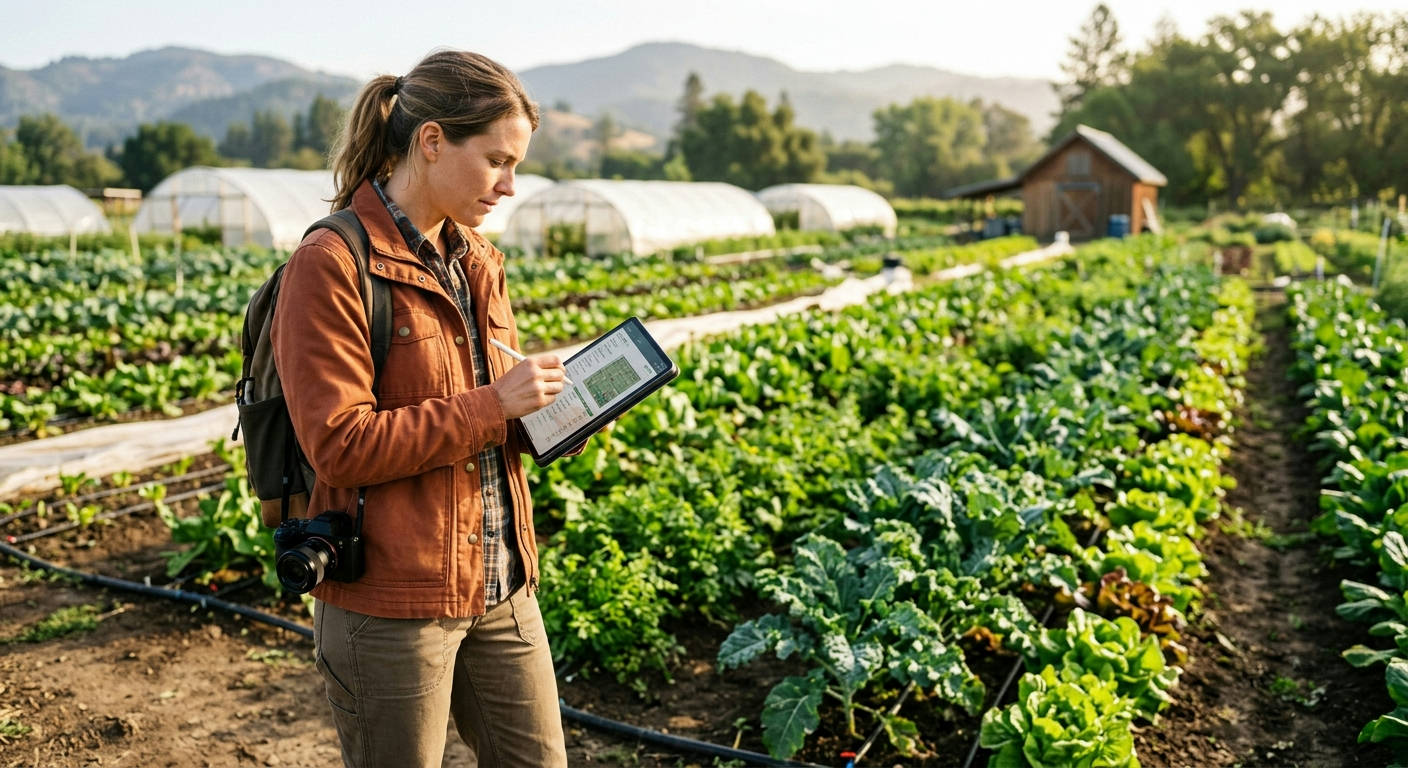
Let’s cut right to the chase. You’ve heard the buzz about a new app that promises to turn your smartphone into a digital farm, yielding real cash from crops you’ll never touch. The concept is slick, but is it solid? This o farming review is going to dig into the dirt and see if O Farming is a revolutionary investment platform or just another way to lose your shirt in 2026’s crowded app market. We’re going to break down the promises, the platform, and the potential pitfalls.
The idea of earning passive income from agriculture without buying a tractor sounds great. But with any new “fintech” disruptor, the devil is always in the details. So, let’s get into it.
What Exactly is O Farming and How Does It Claim to Work?
O Farming pitches itself as “agricultural investing for the masses.” The platform connects everyday people like you and me with commercial farms that need capital. Instead of buying stocks, you’re buying a piece of a real-world agricultural project.
The Elevator Pitch: Digital Sharecropping for 2026
Think of it as micro-investing meets farming. You open the app, browse various “opportunities”—like a plot of high-yield corn in Iowa, a share in a herd of dairy cows in Wisconsin, or even a stake in an indoor vertical strawberry farm.
You invest a small amount, say $100, to sponsor a “unit.” This could be a few rows of corn or a fraction of a cow. O Farming pools this money and gives it to the farmer. When the harvest comes in or the livestock is sold, you supposedly get a cut of the profits, proportional to your investment.
Unpacking the Tech: App Interface and User Experience
The O Farming app itself is clean and modern, clearly designed to appeal to a generation that’s comfortable with Robinhood and Acorns. It gamifies the process with slick graphics, progress bars showing crop growth, and even “live” weather updates for your sponsored farm.
The user onboarding is simple. You connect a bank account, verify your identity, and you can start browsing investment opportunities within minutes. This low barrier to entry is a huge part of its appeal, but it can also lure in novice investors who may not understand the inherent risks.
The Core Promise: Passive Income from Real-World Farms
The core value proposition is simple: diversification and passive income. Your money is tied to a tangible asset—food—which is theoretically more stable than volatile tech stocks or crypto. O Farming claims its model provides a hedge against inflation and market downturns, all while supporting real American farmers.
It’s a powerful story. But a good story doesn’t guarantee a good return.
The Financials: Breaking Down the O Farming Investment Model
This is where things get complicated. The slick interface masks a complex financial model that you need to understand before you put a single dollar into the system.
How You “Invest”: Buying Crop or Livestock Units
When you “buy” a unit, you aren’t actually purchasing an asset. You are entering into a profit-sharing agreement. This is a critical distinction. You don’t own the corn or the cow; you own a contract that entitles you to a portion of the revenue if the project is successful.
Each project has a different timeline. A corn harvest might be a 6-month cycle, while a cattle investment could be 18-24 months. During this time, your money is completely illiquid. You can’t just sell your “unit” if you need cash.
The Fee Structure: Where They Skim Their Cut
O Farming isn’t a charity. They make money through a series of fees that can eat into your returns. There’s typically a platform fee of 2-3% on your initial investment.
Then, they take a percentage of the final profit, often between 15-25%. This is on top of the operational costs deducted by the farm itself. By the time the money gets back to you, the gross profit figure you saw on the app can look a lot smaller.
“The promise of high returns often hides a reality of high fees. Always read the fine print on the fee structure before you commit capital to any crowdfunded platform.”
Projected ROI vs. Reality: A Hard Look at the Numbers
The app advertises potential returns of 8-15% annually. These numbers look fantastic compared to a high-yield savings account. But these are projections, not guarantees. Agriculture is an incredibly risky business.
A single hailstorm, a drought, a disease outbreak, or a drop in commodity prices can wipe out an entire year’s profit. As a digital investor, you absorb that risk. If the harvest fails, your investment could go to zero. The platform’s risk disclosures are there, but they’re buried in legal text most users will scroll right past. According to data from the USDA’s Economic Research Service, farm profitability can swing wildly year to year, a fact that slick app interfaces tend to gloss over.
In-Depth O Farming Review: The Good, The Bad, and The Ugly
Let’s put all the pieces together. No platform is perfect, but O Farming has some particularly sharp edges you need to be aware of.
The Pros: What O Farming Gets Right ✅
- Accessibility: It genuinely opens up an alternative asset class that was previously inaccessible to small-scale investors.
- Diversification: It offers a way to invest in something completely uncorrelated with the stock market.
- Tangibility: There’s a psychological comfort in knowing your money is tied to a real-world, essential industry like food production.
- User Experience: The app is well-designed and easy to navigate, making the process feel simple and engaging.
The Cons: Serious Red Flags to Consider 🚩
- High Risk: The risk of crop failure or livestock loss is very real, and you could lose your entire investment.
- Lack of Liquidity: Your money is tied up for months or even years. This is not a place for your emergency fund.
- Opaque Fees: The multi-layered fee structure can significantly reduce your net returns.
- Overstated Projections: The advertised ROI figures are best-case scenarios and don’t adequately represent the risks involved.
Here’s a breakdown to help you weigh the decision:
| Feature/Aspect | The Upside 👍 | The Downside 👎 |
|---|---|---|
| Investment Type | Unique asset class (agriculture) | High-risk, subject to weather & disease |
| Accessibility | Low minimum investment ($50-$100) | Lures in inexperienced investors |
| Liquidity | N/A | Money is locked in for 6-24+ months |
| Returns | Potential for 8-15% ROI | Projections are not guaranteed, can be zero |
| Fees | Transparently listed (if you look) | Can total over 25% of profits |
| Platform | Modern, easy-to-use app | Gamification can mask serious risks |
Performance Under the Microscope: Does O Farming Deliver?
A great concept is meaningless if the execution is flawed. Let’s look at the actual performance and user experience when things don’t go according to the marketing plan.
User Testimonials and Community Feedback
Digging through forums and user groups in 2026 paints a mixed picture. Early adopters from 2024-2025 who invested in successful projects are ecstatic, posting screenshots of their payouts. They are the platform’s biggest cheerleaders.
However, a growing number of users are reporting projects that have underperformed or failed completely. These users often complain that the risks weren’t made clear enough upfront and that they feel misled by the app’s optimistic projections. This disparity in user experience is a classic sign of a high-risk investment platform.
The Payout Process: Getting Your Money Out
For successful projects, the payout process seems to be relatively smooth. Once a project cycle is complete and profits are calculated, the funds appear in your O Farming wallet. From there, you can initiate a transfer to your linked bank account, which typically takes 3-5 business days.
The problems arise when projects fail. Communication can become spotty, with users reporting that they get generic updates about “unfavorable conditions” without specific details. Getting a clear answer on what exactly went wrong and why their investment is gone is a common frustration.
Customer Support: Are They There When Things Go Wrong?
Customer support appears to be a major bottleneck. When everything is going well, you don’t need them. But when an investment sours, users report long wait times for email responses and a support team that provides scripted, unhelpful answers. This is a massive red flag. A company handling your money should have robust, responsive customer service.
O Farming Alternatives: Other Ways to Get Your Hands Dirty (Digitally)
O Farming isn’t the only game in town. The ag-tech investment space has been growing, and there are other options to consider, each with its own structure.
A Deeper Dive into this O Farming Review: How It Stacks Up
Compared to its peers, O Farming focuses heavily on the small-time, retail investor with its low buy-in and gamified app. This makes it more accessible but also potentially riskier, as it may attract people who can’t afford a total loss.
Platforms like FarmFundr or AcreTrader (which are still major players in 2026) are geared towards accredited investors, requiring much higher minimums but also offering more thorough due diligence and direct fractional ownership of the actual farmland, which is a more stable, long-term asset.
Competitor #1: AgriVest Pro
AgriVest Pro is a fictional competitor that we can use for a direct comparison. It focuses on debt-based financing rather than profit-sharing. You’re essentially loaning money to a farm at a fixed interest rate (say, 7%). Your return is capped, but it’s also more predictable. You get your fixed return as long as the farm doesn’t default entirely, making it a lower-risk, lower-reward alternative to O Farming’s all-or-nothing model.
Old-School REITs vs. New-Age Apps
Don’t forget traditional investment vehicles. You can get exposure to agriculture through Farmland Real Estate Investment Trusts (REITs) like Farmland Partners (FPI) or Gladstone Land (LAND). These are publicly traded companies that own and lease out farmland. You can buy and sell shares easily through any brokerage account. While you might not get the same direct connection to a specific crop, you get daily liquidity and the transparency that comes with being a public company.
For those looking for something a bit more hands-on but still digital, you could even explore books on modern agribusiness to truly understand the market. A quick search for something like The Intelligent Agricultural Investor on Amazon can provide a solid educational foundation.
Is O Farming a Scam or a Legitimate Opportunity?
This is the million-dollar question. Based on my analysis, O Farming is not an outright scam in the sense that they just take your money and run. There are real farms and real agricultural projects behind the app.
The issue isn’t one of fraud, but one of risk and transparency. It walks a fine line, and its marketing feels dangerously close to misrepresentation. This is a common theme with many app-based income opportunities, where the potential rewards are highlighted and the very real risks are downplayed. It’s a similar gray area we see when asking if platforms like the Mobee App are a good use of your time.
“Legitimate but high-risk is not the same as a scam. But for the person who loses their money, that distinction doesn’t feel very important.”
Analyzing the Business Model: Is it Sustainable?
The model’s sustainability depends entirely on its ability to consistently select winning farm projects. A few bad seasons in a row could lead to a mass exodus of users and a collapse of confidence in the platform. Their vetting process for farmers and projects is a black box, and investors are placing a huge amount of blind faith in O Farming’s anonymous analysts.
The Financial Industry Regulatory Authority (FINRA) has issued multiple warnings about crowdfunded investment platforms, reminding investors that these are often high-risk, speculative, and illiquid ventures. O Farming fits that description perfectly.
Final Verdict: My Recommendation for 2026
After this deep-dive o farming review, the verdict is clear: O Farming is a speculative instrument, not a reliable investment. It’s a high-stakes gamble dressed up in the friendly clothes of a modern fintech app.
Who O Farming is REALLY For
This platform is only suitable for someone with a high-risk tolerance and a portfolio that is already well-diversified. This should be “play money”—an amount you are fully prepared to lose in its entirety for the novelty of investing in a digital farm. Think of it as a trip to Vegas, not a contribution to your retirement account.
Who Should Steer Clear
If you are investing money you cannot afford to lose, stay far away. If you need liquidity, this is not for you. If you are a risk-averse investor looking for steady, predictable returns, you should stick to traditional options like REITs or dividend stocks. For most people, O Farming’s risk profile is simply too high.
The Bottom Line on This O Farming Review
The concept is compelling, and the app is slick. But the underlying investment is fraught with risk, a lack of transparency, and poor customer support when things go south. While it’s an interesting innovation in the ag-tech space, O Farming is a harvest you should probably watch from the sidelines. There are better, safer ways to grow your money in 2026.
